

Helping you choose the right car seat
From an infant carrier for your newborn to a seat for your schoolchild — every child and every car needs its own choice. Answer a few quick questions and we'll help you find a car seat that will keep your child safe for years to come.


KikkaBoo® Car seat i-Scout i-SIZE (100-150 cm) Light Grey
Choose your option


AeroMoov® Air layer for car seat Group 2/3 (15-36 kg) Berry
Choose your option


Cybex Platinum® Child Car Seat Solution™ T i-Fix 2/3 (100-150cm) PLUS Platinum White
Choose your option


Joie® Belted Booster Seat i-Trillo™ FX i-Size 2/3 (100-150 cm) Shale
Choose your option


Cybex Platinum® Car Seat Cloud™ T i-Size (45-87cm) PLUS Cozy Beige
Choose your option


Cybex Fashion® Child Car Seat Cloud™ T i-Size (0-13kg) Jeremy Scott Wings
Choose your option


Cybex® Summer Cover Cloud Z2 / T Line i-Size Grey
Choose your option


Cybex Platinum® Car Seat Sirona™ T i-Size (40-105cm) Comfort Sepia Black
Choose your option


AeroMoov® Air layer with buckle Group 2/3 (15-36 kg) Vanilla
Choose your option


AeroMoov® Air layer Group 2/3 (15-36 kg) Vanilla
Choose your option

Cybex® Infant Car Seat Insect Net Black
Choose your option


Cybex® SensorSafe Safety Kit
Choose your option


AeroMoov® Air layer with buckle Group 2/3 (15-36 kg) Antracite
Choose your option


AeroMoov® Air layer Group 2/3 (15-36 kg) Antracite
Choose your option


Nuna® Car Seat Arra™ Next i-Size 157° 0+ (40-85 cm) Chateau
Choose your option


Nuna® IsoFix Base™ Next Modular System
Choose your option


Cybex® Baby car seat Cloud™ G3 i-Size (40-87cm) PLUS Chocolate Brown
Choose your option


Cybex® Car Seat Sirona G3 i-Size (40-105cm) PLUS Moon Black
Choose your option


Cybex® Car Seat Cloud G3 i-Size (40-87cm) PLUS Moon Black
Choose your option


CBX by CYBEX® Car Seat Pallas B i-Size (76-150cm) Black
Choose your option


KikkaBoo® Children's booster seat i-Tip 2 i-SIZE (125-150 cm) Black
Choose your option


Nuna® Baby car seat Aace™ LX i-Size 2/3 (15-36 kg) Calla
Choose your option


KikkaBoo® IsoFix Base i-Prime
Choose your option


Cybex® Car Seat Cloud G3 i-Size (40-87cm) PLUS Stormy Blue
Choose your option

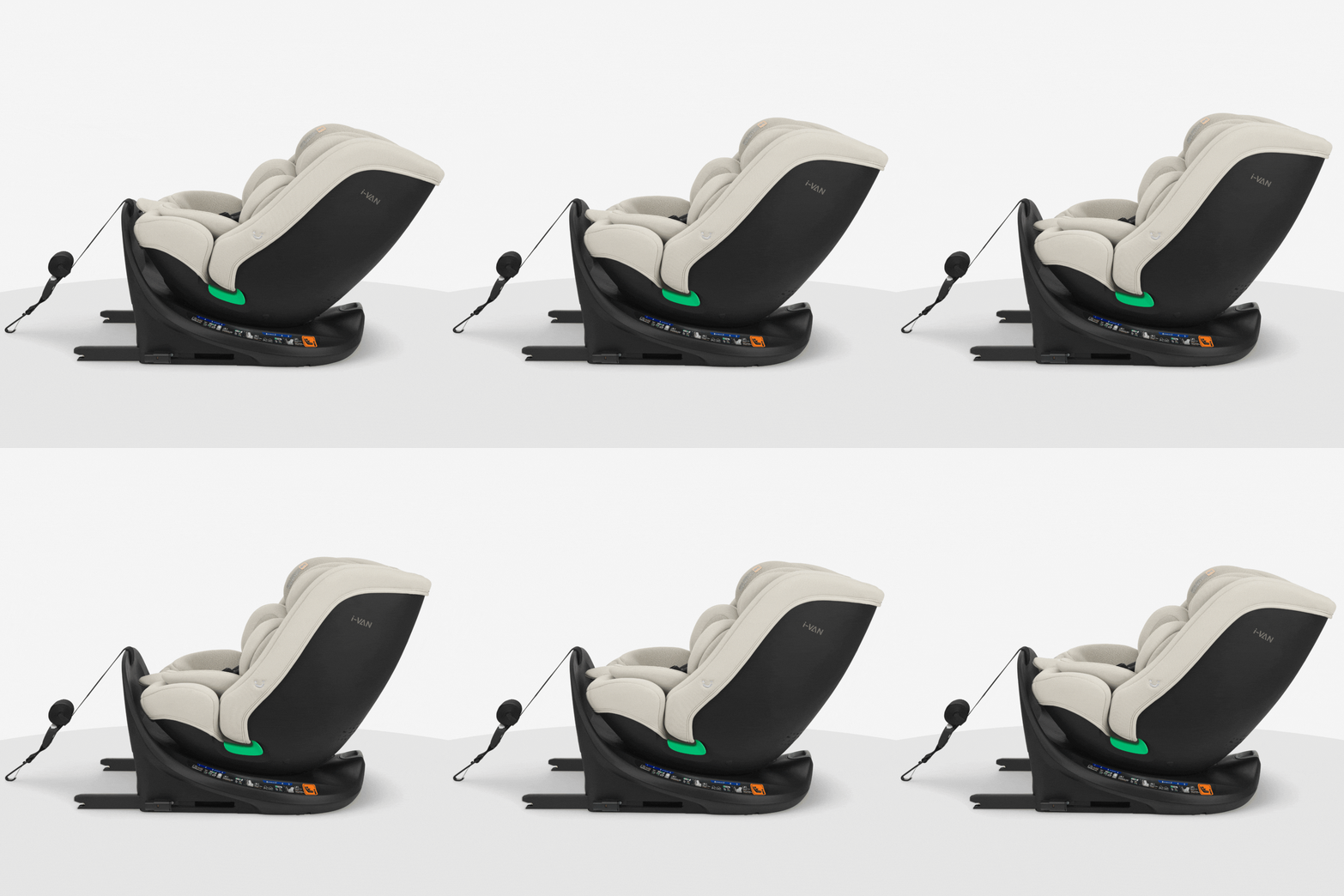
KikkaBoo® Car seat 360° i-Van i-SIZE (40-150 cm) Light Beige
Choose your option


Cybex Platinum® Car Seat Solution™ T i-Fix 2/3 (100-150cm) PLUS Mirage Grey
Choose your option


Nuna® Baby car seat Arra™ Flex i-Size 157° (40-87 cm) Caviar
Choose your option


Nuna® Infant Car Seat Pipa™ Urbn 0+ (40-75 cm) Chestnut
Choose your option


Joie® Car Seat i-Bold™ i-Size 1/2/3 (76-150 cm) Thunder
Choose your option


Cybex Platinum® Base T Cloud/Sirona i-Size Black
Choose your option


Cybex Platinum® Child Car Seat Cloud™ T i-Size (45-87cm) PLUS Sepia Black
Choose your option


Cybex® Car Seat Sirona Gi i-Size (9-18 kg) PLUS Chocolate Brown
Choose your option


Cybex Platinum® Car Seat Cloud T i-Size 0+ (45-87cm) PLUS Sage Green
Choose your option


Cybex® Car Seat Sirona Gi i-Size (9-18 kg) Comfort Almond Beige
Choose your option


Cybex® Car seat Pallas G3 i-Size (76-150cm) PLUS Chocolate Brown
Choose your option


Cybex® Children's car seat Pallas G3 i-Size (76-150cm) Almond Beige
Choose your option
How to choose?
When choosing a car seat, it's essential that it matches your child's weight and age and that it's installed correctly in your car.
- Group and age: seats are divided into groups based on the child's weight and height (from 0+ for newborns to group 2/3 for older children), and some models cover several groups at once and grow with your child.
- Isofix and base: fitting with an Isofix base is faster and more stable than fitting with the car's seatbelt, so check whether the base is included or sold separately.
- Rotating seats: 360-degree rotating car seats make it easier to get your child in and out, especially with younger babies.
- Rear-facing travel: longer rear-facing travel is considered safer, which is why many i-Size seats allow it for longer than older standards.
- Stroller compatibility: if you want to use the car seat as part of a travel system too, check the matching adapters for your stroller.
What you want to know
How do I choose the right car seat based on my child's age?
What is an Isofix base and do I need one?
Up to what age should a child travel rear-facing?
How do I check whether a car seat is compatible with my stroller?
More about Car seats
Child car seats for safe travel from birth to 150 cm: infant carriers for newborns, rear-facing reboarders, 360° rotating Isofix seats and high-back boosters for school-age children from Cybex, Nuna, KikkaBoo and more. Choose a seat by your child's height (i-Size) and check that it fits your car before you buy.
How to choose a car seat – quick guide
- 40–87 cm – infant carrier (group 0+): from birth to about 15 months, always rear-facing; portable and often compatible with a pushchair. Car seats 40–87 cm →
- 40–105 or 76–105 cm – reboarder / 360°: up to about 4 years; allows extended rear-facing travel, and rotating seats make getting your child in easier. Car seats 40–105 cm →
- 100–150 cm – high-back booster (group 2/3): from about 4 to 12 years, the child is secured by the car's 3-point belt. Car seats 100–150 cm →
- Isofix: the seat or base clicks onto metal anchor points in the car; a support leg or top tether stops it rotating – fewer installation mistakes.
- ADAC tests: ADAC and its European partners test car seats regularly; scores run from 1.0 to 5.5, lower is better.
- Fitting in your car: check your model on the manufacturer's vehicle fitting list, try the installation before buying and make sure the seat moves no more than about 2.5 cm (1 inch).
Read more: How to choose a car seat · Rear-facing until age 4 · KikkaBoo 360° car seats compared · Cybex vs Nuna
Car seat FAQ
What is Isofix and do I need it?
Isofix is a pair of standard metal anchor points between the seat cushion and backrest of the rear seat. The car seat or base clicks onto them, so fitting is quicker and less error-prone than with a belt. Most recent cars have it – check your vehicle handbook. If yours doesn't, choose a seat that can also be belt-fitted.
How long should my child ride rear-facing?
UN Regulation R129 (i-Size) requires rear-facing until at least 15 months. Safety experts such as ADAC recommend keeping children rear-facing as long as possible, ideally until about 4 years, because in a frontal crash the seat spreads the forces across the back and protects the neck. Why rear-facing is safer →
Can a car seat go in the front seat?
A rear-facing seat may only be used in the front if the passenger airbag is switched off – an active airbag is extremely dangerous for it. The back seat is the safest place for children. Always follow your car manufacturer's instructions and local rules.
Is a second-hand car seat safe?
Only if you know its history: it has never been in a crash, it is complete with all parts, instructions and the R129 or R44 approval label, and it is within the lifespan stated by the manufacturer. Replace any seat after a crash, even without visible damage.
When should I move to a bigger car seat?
When your child exceeds the maximum height or weight on the label, or when the top of their head is above the shell or the headrest at its highest setting. Age is only a guide – size is what counts.
What is the difference between i-Size (R129) and R44?
R44 groups seats by weight (groups 0+, 1, 2 and 3). The newer R129 (i-Size) classifies them by height, requires rear-facing until at least 15 months and includes a side-impact test. New R44 seats can no longer be sold in the EU since September 2024, but existing ones may still be used.



